How to Read Your Roundexa Interview Report – A Complete Guide
Finishing an interview is only half the work. The report you get after is where you actually figure out what to fix. Most people glance at their score and move on — but the detailed breakdown is where the real improvement happens. Here's how to get the most out of every session.
Overview of Your Report
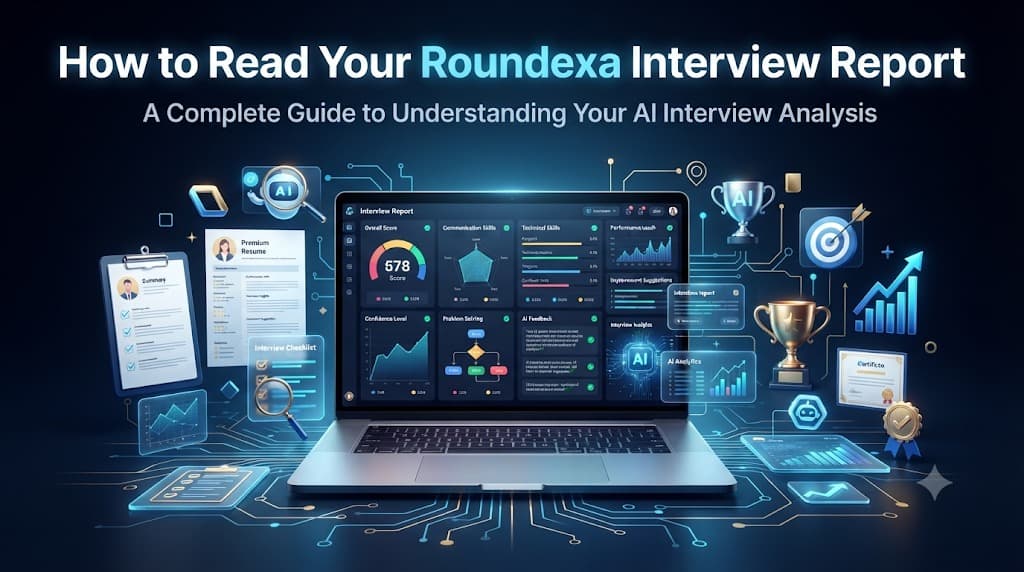
Your Roundexa report is divided into several sections that together give you a complete picture of your interview performance. Here is what each section tells you:
1. Readiness Score
The Readiness Score (0–100) reflects how prepared you are for a real interview based on the overall quality, accuracy, and depth of your answers.
- 80–100: Strong preparation. You are ready for real interviews.
- 60–79: Good foundation with specific areas to improve.
- 40–59: Moderate — focus on the weak areas identified in the report.
- Below 40: Significant improvement needed. More structured practice required.
2. Confidence Score
The Confidence Score evaluates how assertively and clearly you communicated — not just what you said, but how you said it. This includes clarity of expression, directness, and structured responses. A high technical score with a low confidence score means you know the answers but struggle to communicate them effectively.
3. Technical Assessment
The Technical Score evaluates the accuracy and depth of your technical answers. It identifies:
- Questions you answered correctly and completely
- Questions where your answer was partially correct
- Knowledge gaps — topics you need to study further
4. Question-by-Question Breakdown
This is the most valuable part of your report. For each question asked during the interview you can see:
- The question that was asked
- Your exact answer (transcribed)
- AI feedback on what was good and what was missing
- A sample ideal answer for comparison
- A score for that specific question
Review every question you scored low on. Read the ideal answer carefully and note the difference between your response and the expected one.
5. Strengths Section
This section highlights what you did well — strong communication, correct answers, good structure, or impressive domain knowledge. Take note of these and maintain these qualities in your next session.
6. Areas for Improvement
This section lists specific weaknesses identified during the session:
- Topics where your answers were incomplete or incorrect
- Communication patterns to work on
- Skills or concepts to study before your next session
7. Improvement Suggestions
Personalized recommendations based on your performance — specific topics to review, types of questions to practice, and areas to focus on in your next session.
How to Use Your Report Effectively
- Review your report within 24 hours of your session while the context is fresh
- Study the ideal answers for questions you scored below 60
- Create a short study list from your “Areas for Improvement” section
- Focus your next practice session on those specific weak areas
- Track your score progression across multiple sessions to measure improvement
- Aim to improve your weakest score by 10+ points in each subsequent session
Final Thoughts
Your Roundexa report is a roadmap for improvement, not just a score. The candidates who improve fastest are those who review their reports carefully and make targeted changes in every session. Practice consistently on Roundexa.com, use your reports to guide your preparation, and track your progress over time.
Ready to Practice?
Take a free AI mock interview on Roundexa and get instant, actionable feedback before the real one.
Practice on RoundexaRead Next
How to Create Your Roundexa Account and Start Practicing Interviews in Minutes
New to Roundexa? Here's everything you need — set up your account, upload your resume, and start your first AI mock interview in under 10 minutes.
How AI Mock Interviews Can Improve Your Hiring Chances
Most people fail interviews not because they don't know the answers — but because they've never practiced saying them out loud under pressure. Here's how AI mock interviews fix that.